

Adventure Does Not Have to Be Big: Why We Made a Microadventure Journal
Adventure has a way of becoming something we keep putting off.
We tell ourselves we need more time, more money, a longer weekend, better weather, or a destination far enough away to feel worthwhile. Meanwhile, there are trails we have never walked, roads we have never followed, nearby towns we have barely explored, and sunsets we keep watching from the same place.
That is the thinking behind our Microadventure Journal.
It was created as a place to record the smaller escapes that interrupt routine and make ordinary life feel a little bigger. Not every adventure has to involve a plane ticket, two weeks away from work, or a carefully planned expedition.
Sometimes it is one night under the stars, an unfamiliar trail, a motorcycle ride with no real destination, or a sunrise you had to wake up early enough to earn.
What We Mean by a Microadventure
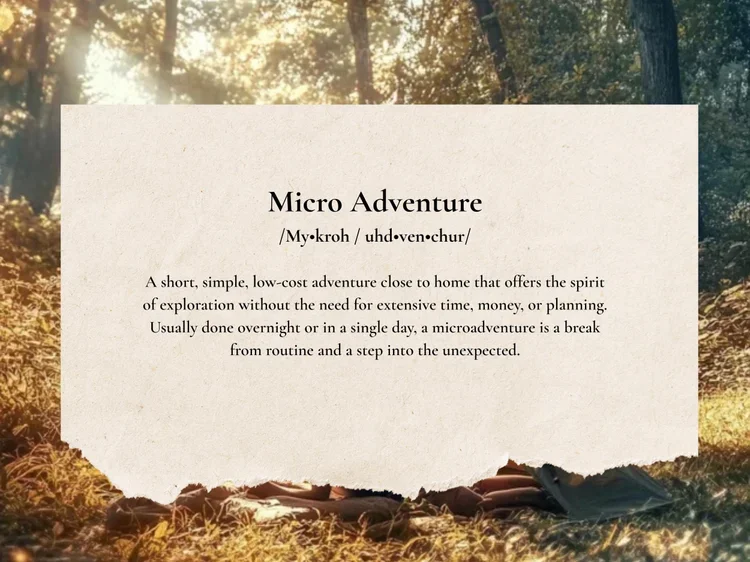
For us, a microadventure is a short, accessible experience that gets you out of your usual routine.
It might last a few hours, a full day, or one night. It can happen close to home and usually does not require much money or planning.
The point is not how far you travel. The point is that you went.
A microadventure could be:
Taking a back road you normally pass
Hiking a local trail for the first time
Sleeping outside in your backyard
Riding out to watch the sunset
Packing breakfast and catching the sunrise
Exploring a nearby state park
Taking the kids on a creek walk
Visiting a small town you have never stopped in
Camping for one night instead of waiting for a long vacation
Turning an ordinary drive into a day of exploration
A short trip can still create a lasting memory. In fact, some of the best adventures happen when expectations are low and the plan is loose.
The Problem We Wanted the Journal to Solve
We take plenty of photos, but photos rarely capture the entire story.
They do not always record why we chose the trip, what surprised us, what went wrong, what the weather felt like, or why a particular moment stayed with us.
Those details disappear faster than we expect.
We wanted a journal that made it easy to capture the experience without turning the trip into a writing assignment. It needed enough structure to help someone remember the important parts, but enough open space for each entry to feel personal.
The goal was not to create a detailed travel planner.
It was to create a record of a life that was actually lived.
Designed for 26 Small Escapes
The journal includes space to document 26 microadventures.
That number was intentional. It works out to roughly one adventure every two weeks for a year.
That is enough to create momentum without turning adventure into another weekly obligation. Some months may include several trips. Other stretches may be quiet. The journal is not meant to create pressure or another schedule to fall behind on.
It is there to encourage action.
Twenty-six experiences over a year could mean 26 hikes, rides, day trips, campouts, family outings, or completely unexpected detours. They do not need to be impressive to anyone else.
They just need to matter to you.
What Is Inside the Microadventure Journal
Each adventure has a two-page spread.
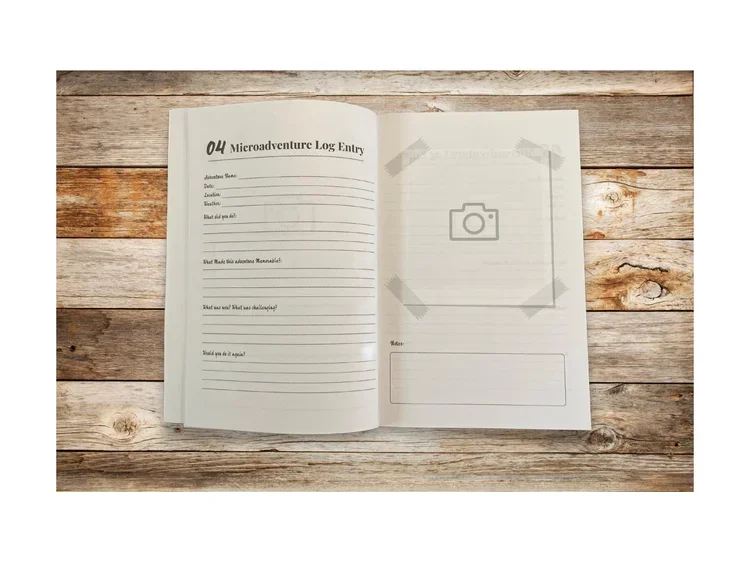
The first page provides guided prompts to record the basic details and think about what made the experience memorable. The prompts include:
Adventure name
Date
Location
Duration
What you did
What made the adventure memorable
What was new or challenging
Whether you would do it again
The facing page includes space for a photograph, along with room for notes, observations, sketches, ticket stubs, small mementos, or anything else worth preserving.
That balance was important.
Some people want to write several paragraphs. Others only want to add a picture and a few sentences. The journal gives you enough direction to get started without deciding how every memory should be recorded.
A Size Made to Go With You
We designed the journal in a compact 5 x 8-inch format.
It is large enough to provide useful writing space but small enough to place in a backpack, motorcycle bag, glove box, camping tote, or day bag.
A journal about getting out into the world should not feel like something that has to stay safely on a bookshelf.
It should be able to come along.
You can fill it out during the trip, write in it while sitting beside the campfire, or complete the entry after getting home. There is no required method. The important part is recording the experience while the details are still fresh.
Building the Look of the Journal
The visual direction started with the same contrast found in a microadventure: the familiar meeting the unexpected.
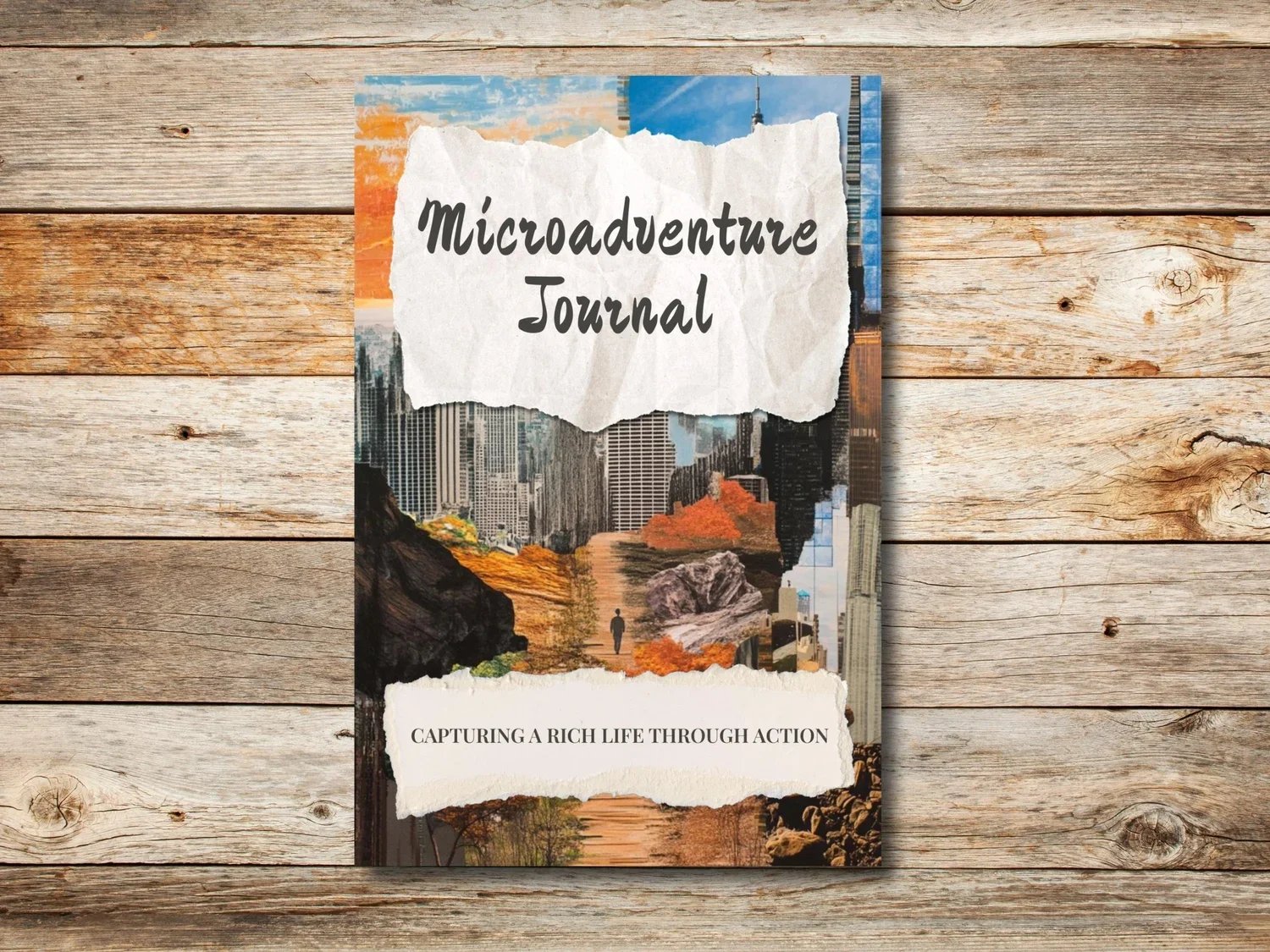
The cover combines city scenes, mountain landscapes, roads, trees, and torn-paper textures. A small figure stands near the center of the scene, surrounded by different possible directions.
The phrase on the cover, Capturing a Rich Life Through Action, sums up the purpose of the journal.
A full life is not built only from major milestones. It is also built from the evenings we decided not to stay home, the roads we turned down, the places we stopped to look around, and the experiences that almost did not happen.
Inside, the design becomes simpler. The pages are meant to be written on, marked up, and made personal. The illustrations and layout support the entries without competing with them.
The Best Adventure Is the One You Will Actually Take
It is easy to admire dramatic adventures from a distance.
It is harder, and often more valuable, to find opportunities inside the life you already have.
That might mean leaving after work instead of waiting for a free weekend. It might mean exploring within an hour of home rather than planning a cross-country trip. It might mean bringing the kids, taking the old motorcycle, using the gear you already own, and accepting that everything does not have to be perfectly organized.
Microadventures lower the barrier to getting started.
They are not a replacement for big trips. They are a way to stop waiting for big trips before we allow ourselves to explore.
A Journal for More Than Hiking
Although the journal fits naturally with hiking and camping, it was not designed around one specific kind of adventure.
It can be used for:
Motorcycle rides
Family road trips
Local hikes
Backyard camping
Fishing trips
Paddling
Bike rides
State park visits
Urban exploration
Farm and nature outings
Scenic drives
Solo days away
Weekend travel
Spontaneous family adventures
The activity is less important than the break from routine.
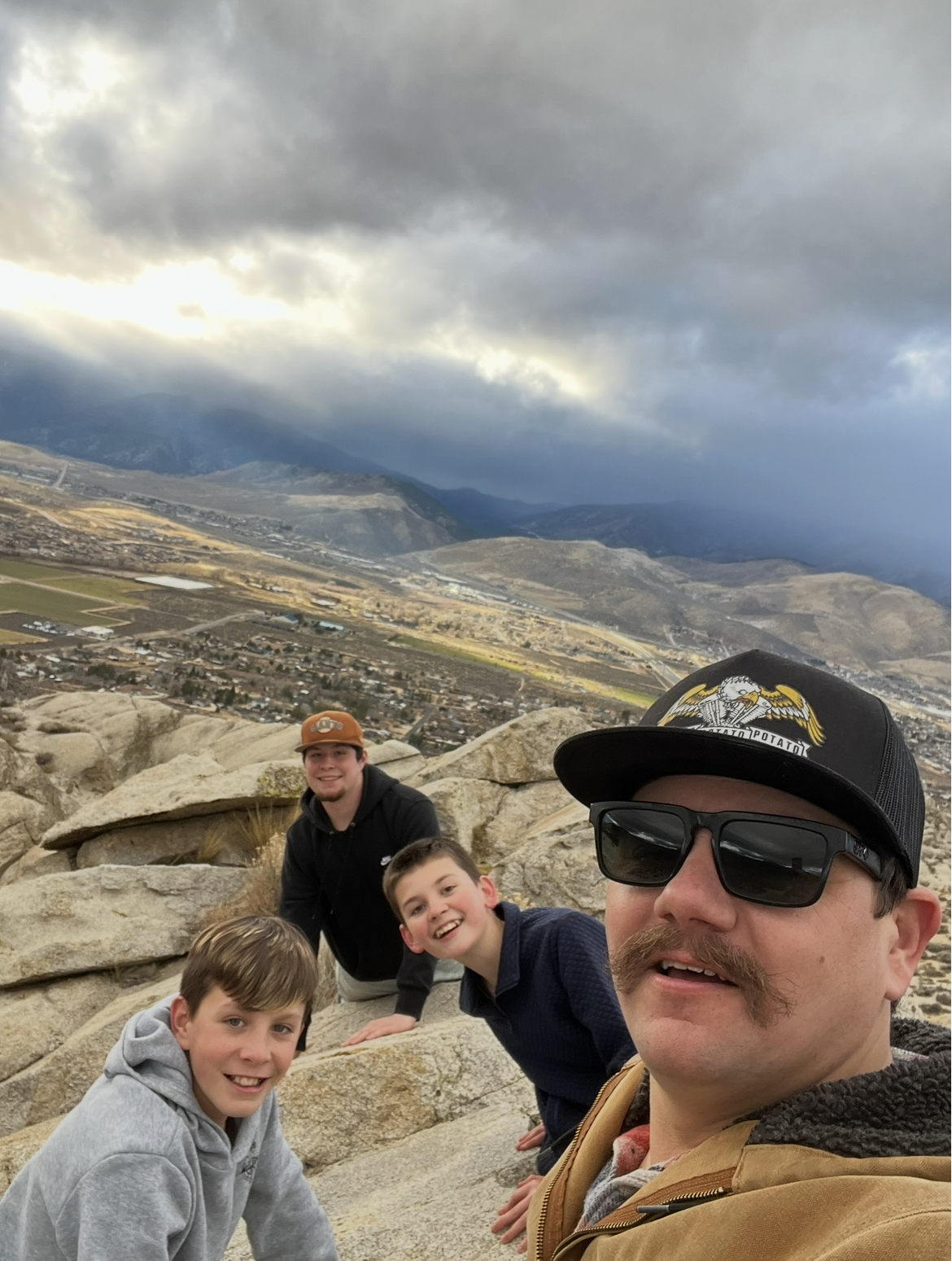
Someone riding a motorcycle through the hills, a family taking the kids to a nearby creek, and a couple spending one night at a campground are all creating stories worth keeping.
Why Write It Down?
Memory tends to keep the biggest moments and lose the smaller details.
Years later, a photo may remind you where you went, but not what happened just before it was taken. You may forget the joke that became part of the trip, the unexpected weather, the wrong turn, the roadside meal, or the reason you almost canceled.
Writing those things down gives the experience a longer life.
It also creates something valuable to look back through. After several entries, the journal becomes more than a collection of individual outings. It becomes evidence that adventure was part of your normal life.
That may be the real value of documenting it.
Start With One Small Adventure
You do not need 26 ideas before opening the journal.
You only need the first one.
Choose a place nearby that you have been curious about. Pack something to eat. Bring the people you enjoy, or go alone. Take a picture, notice what happens, and write down the parts you want to remember.
Then begin looking for the next opportunity.
A rich life is rarely created in one enormous leap. More often, it is built from small decisions to get moving, pay attention, and make something out of the time available.
The Half Dozen & One Microadventure Journal is available in our shop for anyone ready to start recording their own small escapes.
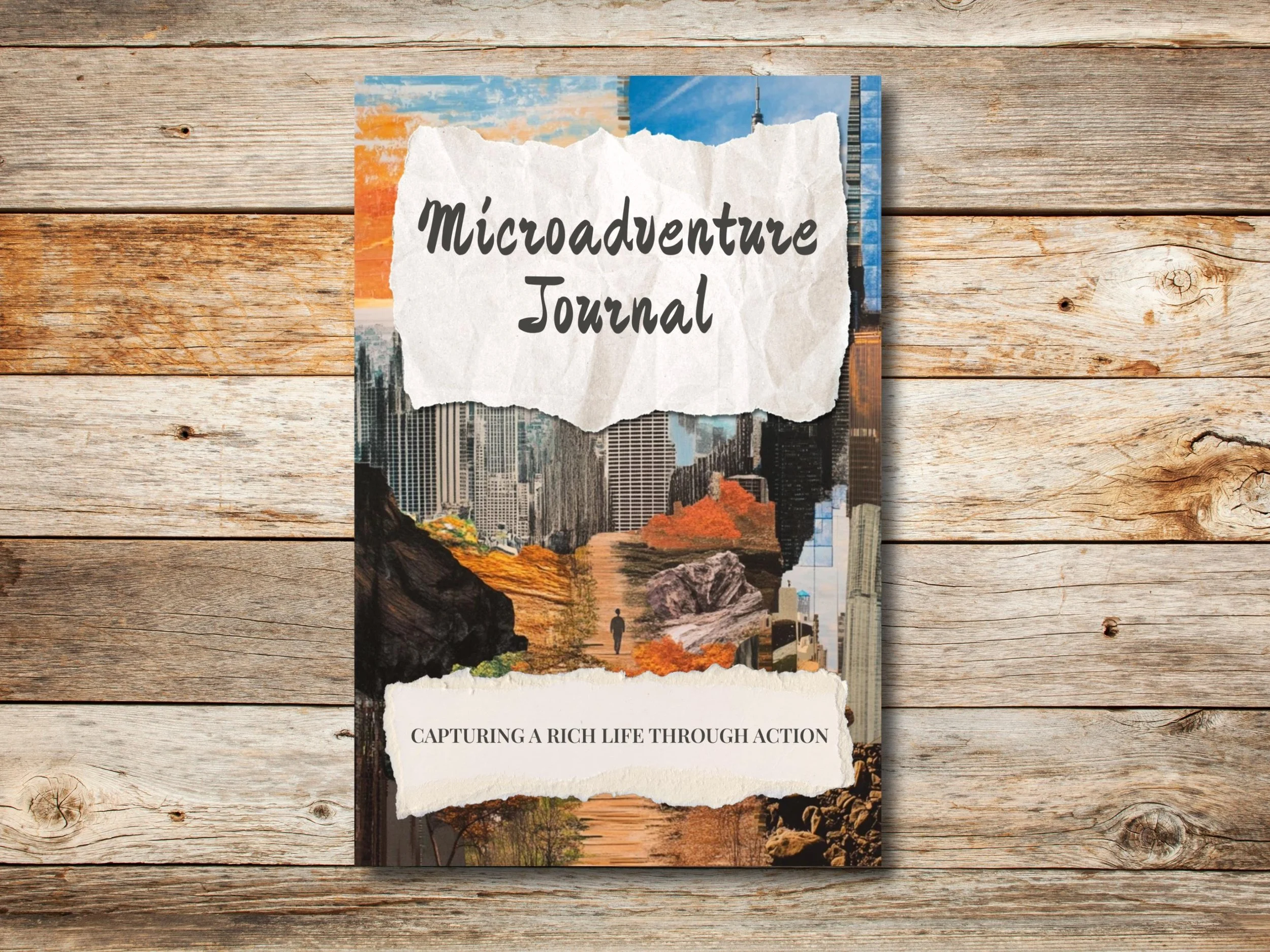
📘 Compact and Travel-Ready: Lightweight and small enough to fit in your backpack or even your pocket, this journal is perfect for spontaneous outdoor adventures and easy to carry on the go.
✍️ Thoughtfully Designed Interior: Includes prompts and lined pages to capture your route, weather, activities, highlights, and reflections from each trip – no detail is too small.
🌿 Ideal Gift for Outdoor Enthusiasts: A meaningful gift idea for hikers, campers, backpackers, and nature lovers who love documenting their experiences.
🧭 Durable and Adventure-Resistant: Built to withstand the elements, this journal’s sturdy cover and quality pages hold up well in various outdoor conditions.
📅 Great for Year-Round Use: Document adventures in all seasons – from snowy treks to sunny summer hikes, it's perfect for every time of year.
🎒 Sustainable and Mindful: Encourage slow travel and intentional living by focusing on microadventures – a growing trend among nature-focused explorers.