

How I Use Play the Forest School Way in Our Play-Based Farm Daycare
As an Amazon Associate I earn from qualifying purchases.
I have never wanted our daycare to feel like a smaller version of a classroom.
Children spend plenty of their lives being told where to sit, what to do next, and what the right answer is. Here, I want them to have room to play, explore, get dirty, try things, help with real work, and figure some things out for themselves.
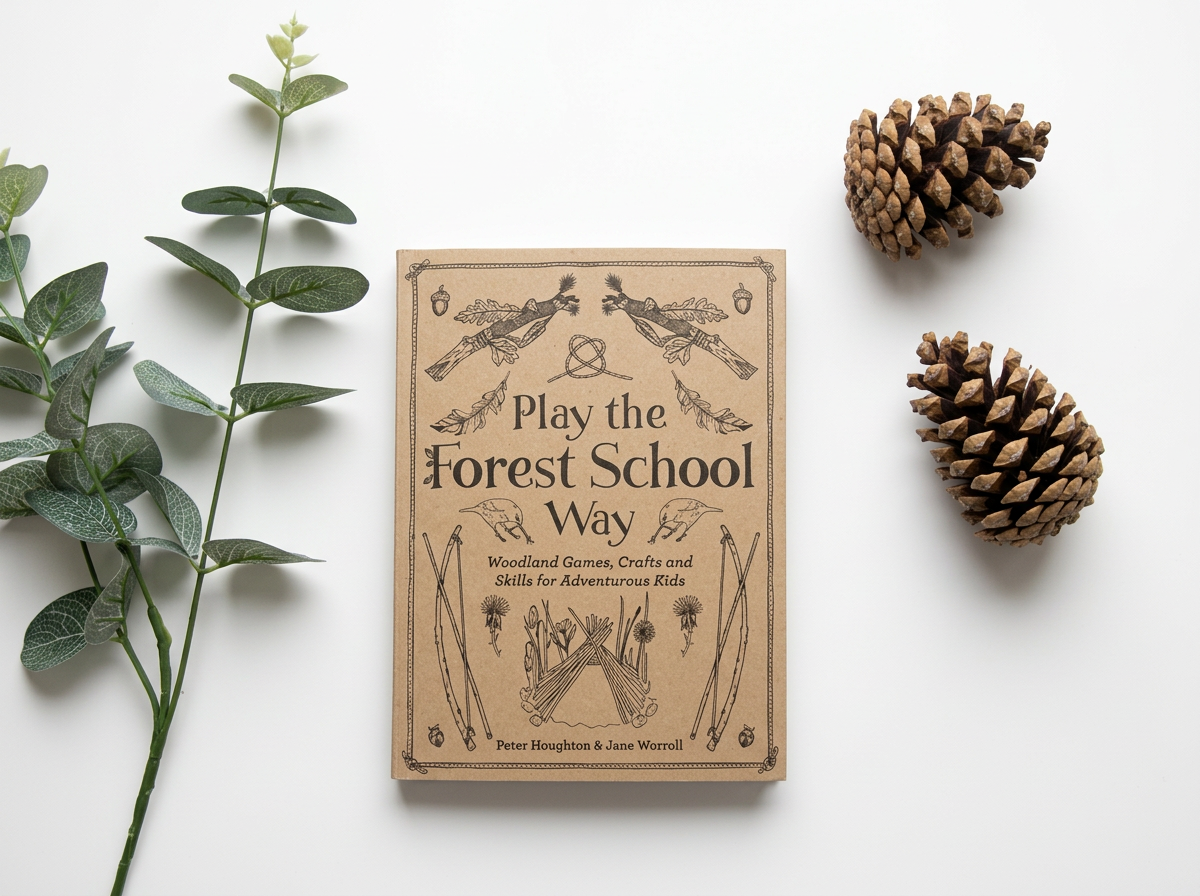
That is one of the reasons I like Play the Forest School Way by Jane Worroll and Peter Houghton.
It is not a book I pull out and work through page by page like a curriculum. I use it more as a source of ideas and inspiration for something we are already doing: giving children meaningful opportunities to learn outside.
The book is built around woodland games, crafts, nature activities, shelter building, foraging, and other hands-on outdoor experiences. Its Forest School approach emphasizes engaging children directly with the natural world rather than keeping nature at a distance.
That fits very naturally with life here.
Play Is the Starting Point
Our daycare is play-based.
That does not mean the children are not learning. It means I do not believe every useful experience needs to look like a lesson.
A child digging in the garden might be experimenting with soil, water, bugs, roots, and tools without anyone stopping the activity to explain that they are “doing science.”
Collecting eggs involves counting, observation, gentle handling, responsibility, and plenty of questions.
Helping plant seeds leads naturally to conversations about what plants need to grow.
Watching an animal behave differently one morning can turn into an entire discussion because one of the kids noticed something before an adult pointed it out.
That kind of learning starts with curiosity.
My job is often less about delivering information and more about creating an environment where there is something worth being curious about.
Why This Book Fits What We Are Already Doing
When I came across Play the Forest School Way, a lot of it felt familiar.
The setting may be woodland rather than our little farm, but the basic idea translates easily: get children outside, give them real materials and experiences, and leave enough room for them to explore.
The book includes activities ranging from nature crafts to shelter building and outdoor skills.
I do not necessarily copy every activity exactly.
Instead, I look at an idea and think about how it could work here, with the ages I care for, the animals and garden we already have, the season, and what the children are interested in at the time.
Sometimes the best activity is the one that starts with a plan and then gets completely hijacked by something the kids discover along the way.
That is usually fine with me.
Following Their Curiosity
One thing I try hard not to do is over-plan every minute outside.
If we head toward the garden to water plants and everyone suddenly becomes fascinated by a trail of ants, we can stop and look at the ants.
If we are gathering eggs and somebody discovers a feather they think is amazing, that can become the important thing for the next ten minutes.
If digging a garden bed turns into an investigation of worms, the worms win.
The original task will still be there later.
Books like Play the Forest School Way are helpful because they give me more ideas to have in my back pocket without requiring me to control exactly where the experience goes.
That distinction matters.
I want to provide opportunities, not scripts.
Real Work Can Be Play Too
Some of our favorite activities are not activities I invented for children at all.
They are simply things that need to happen around the farm.
The animals need to be cared for.
Eggs need to be gathered.
Plants need watering.
Seeds need planting.
Vegetables eventually need harvesting.
Sometimes there is bread to bake or something from the garden to turn into food.
Young children are often eager to participate in real work when they are given a job they can actually do.
There is a different feeling between handing a child a pretend watering can as part of an activity and handing them a real watering can because the tomatoes actually need water.
Both can be fun.
But the second one gives their effort a purpose.
That is something I value about raising and caring for children in this environment.
Nature Does Not Need to Be Perfect
Outdoor childhood has also become surprisingly curated.
There are beautiful sensory bins, elaborate nature crafts, themed activities, and perfectly arranged outdoor classrooms all over the internet.
Those things can be great.
But children do not require them in order to have a meaningful experience outside.
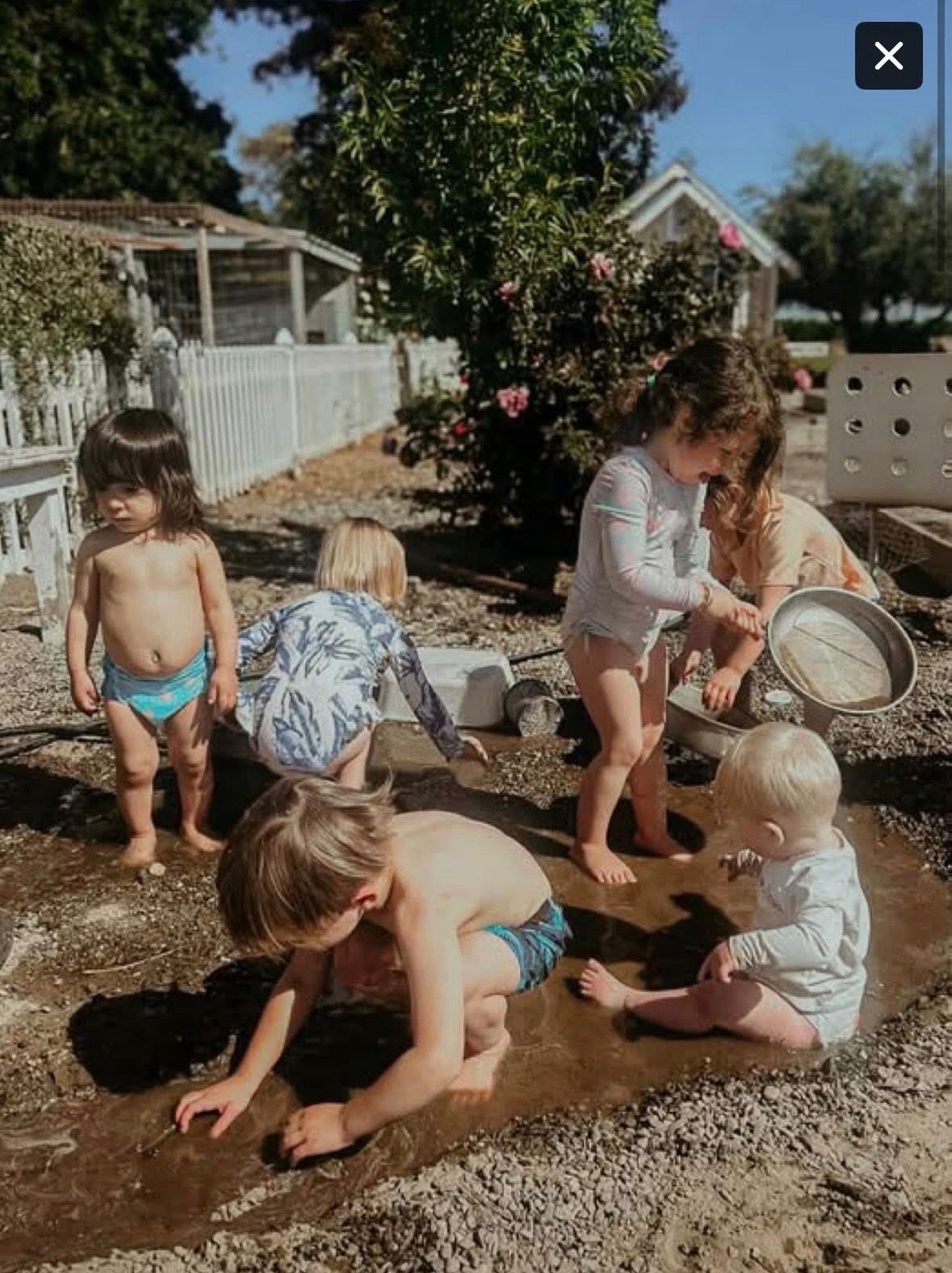
Our version often involves mud.
There are weeds in the garden.
Animals do unpredictable things.
Projects do not always work.
The kids may become interested in something completely different from what I expected.
Sometimes everyone comes inside considerably dirtier than when they went out.
That is real life here.
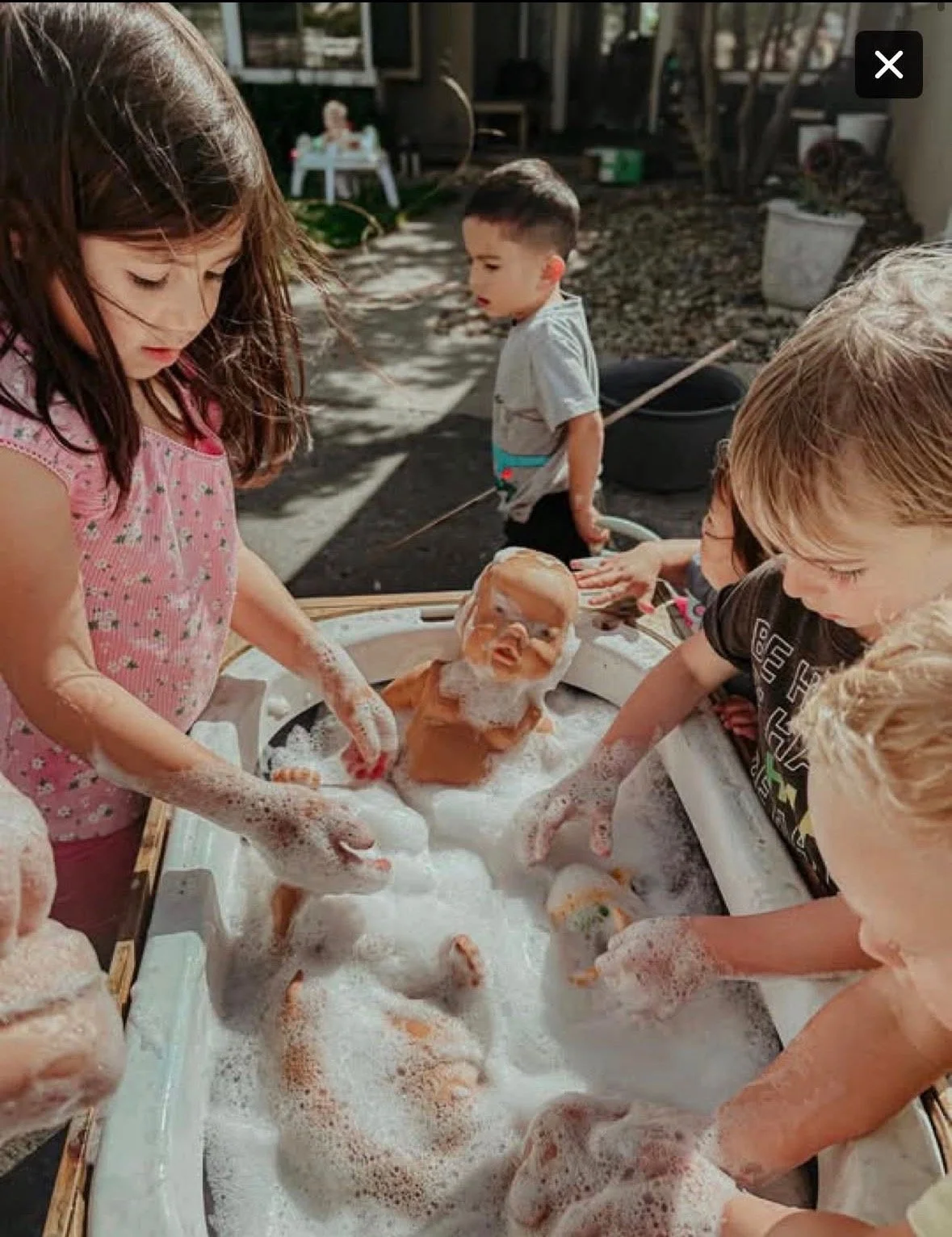
And I think there is value in leaving some of that messiness intact.
Adapting Ideas for Young Children
A book of outdoor activities is a resource, not a checklist.
Some ideas are appropriate for one group of children and not another. Activities involving tools, plants, animals, fire, food, or other potential hazards obviously require judgment and close adult supervision.
I adapt what we do based on the children who are actually here.
That can mean simplifying an activity, doing part of it myself, using different materials, or deciding that an interesting idea needs to wait until the children are older.
The goal is not to say, “We completed another activity from the book.”
The goal is to give the kids a good experience.
Building a Childhood With More Outside in It
I like having Play the Forest School Way around because it reminds me how many possibilities exist in an ordinary patch of outdoors.
You do not necessarily need a field trip.
You do not need expensive equipment.
You do not need to transform every experience into a formal lesson.
Sometimes you need a few sticks, some dirt, a tree, a garden, an interesting question, and enough time to see where the kids take it.
Our farm gives us an unusually good setting for that kind of childhood, and I want to use it.
I want the children here to remember gathering eggs, digging holes, planting things, caring for animals, making food, climbing, building, wondering, and spending a lot of their days outside.
This book is one of the resources that helps keep new ideas coming while staying true to that philosophy.
And if an activity leads somewhere completely different from the page?
That is usually part of the fun.
If you are looking for more ideas for getting children outside and letting nature become part of their play, you can find Play the Forest School Way on Amazon here.