

Why Fixing Things Still Matters
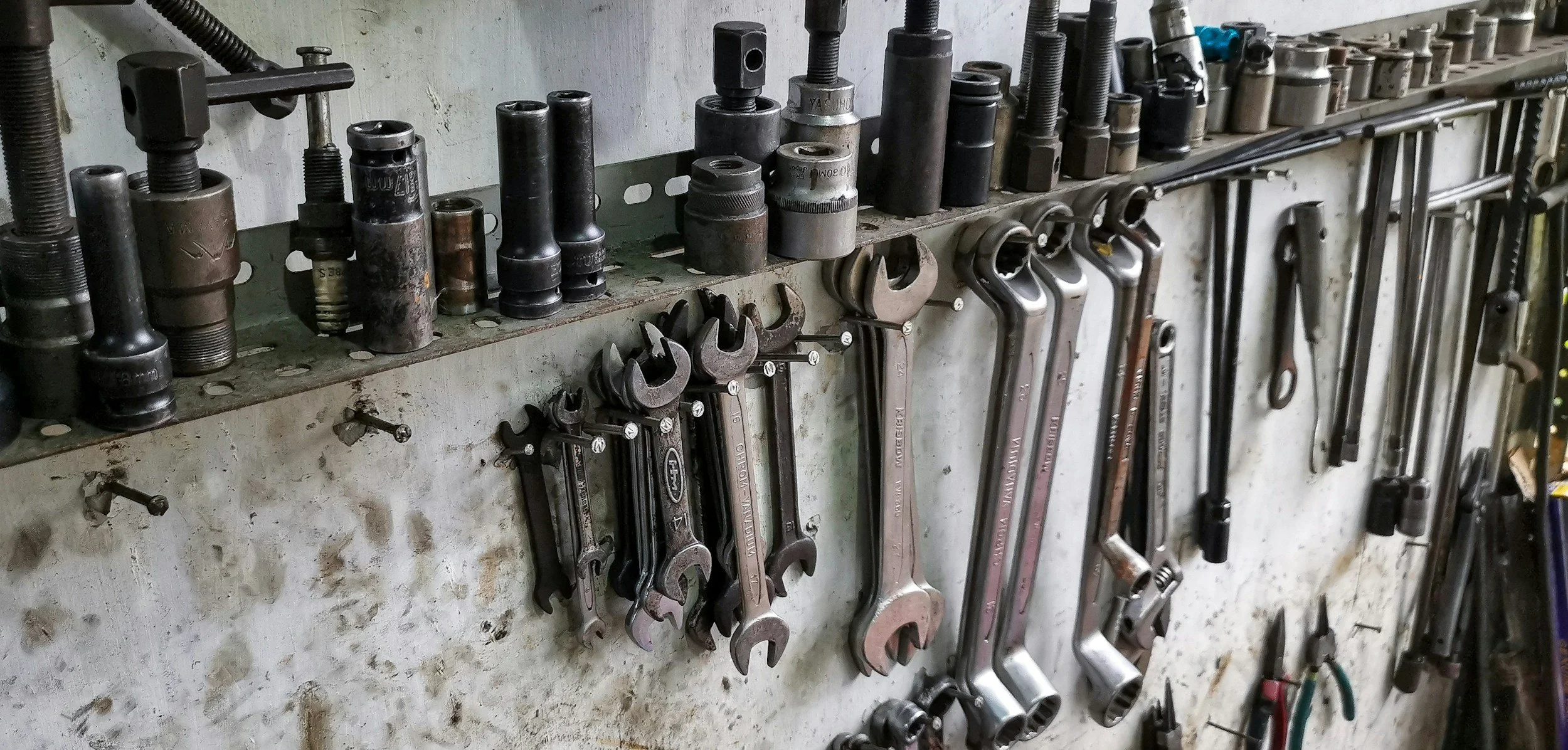
I have spent a lot of time lately fixing things.
Cars. Motorcycles. Appliances. Computers. Sewing machines. Whatever happens to stop working around the house.
With a big family, there is usually something.
A car develops a problem. A motorcycle needs maintenance. A sewing machine starts acting strange in the middle of a project. An appliance quits. A computer decides today is the day it no longer wants to cooperate.
My first instinct has almost always been the same:
Can I fix it?
That partly comes from my background. I went to WyoTech in Laramie, Wyoming, to train as an automotive technician, and I have maintained and repaired my own vehicles for most of my life.
But increasingly, I think there is something bigger behind it.
Knowing how to repair the things we own is becoming less common at exactly the same time that repairing them is becoming more difficult.
I think that matters.
When You Could Actually Fix the Car
Cars are where I notice the change most.
There was a time when a reasonably capable person with some mechanical knowledge, a decent set of tools, and a repair manual could tackle a surprising amount of work in the driveway.
That is still true to some extent.
Brakes are still brakes.
Wheel bearings still wear out.
Engines still need oil.
Suspension components still fail.
A lot of basic mechanical work has not fundamentally changed.
But increasingly, the mechanical part is only part of the problem.
Modern vehicles are networks of computers.
Modules communicate with other modules. Sensors need calibration. Components may need programming or relearning procedures after replacement. Diagnosing the problem can require specialized software before you ever pick up a wrench.
Sometimes I know exactly how to replace the failed part.
The harder question is whether the vehicle is going to let me.
That is a strange change in the relationship between a person and a machine they supposedly own.
Repairability Is Becoming Part of What I Buy
I have noticed this affecting the way I think about buying vehicles.
It used to be mostly about the usual things.
Is it reliable?
Is it useful?
Does it fit the family?
What does it cost?
Do I like driving or riding it?
Now another question is creeping higher on the list:
Can I actually work on this thing?
Can I get parts?
Can I get service information?
Can I diagnose it without a dealer-only computer?
If I replace something, will the vehicle accept the new part or does someone have to electronically introduce them?
What is going to happen when this thing is 12 years old instead of three?
Those questions matter because I do not necessarily want a new vehicle every few years.
I'd rather maintain a good one.
This Isn't Just About Cars
The frustrating part is that the same issue shows up everywhere.
A sewing machine stops working.
Can I get the part?
An appliance fails.
Is the failed component replaceable, or is it integrated into an expensive assembly?
A laptop has a bad battery.
Can I replace it?
A phone needs a screen.
Is it economically reasonable to repair, or has the product effectively been designed around replacement?
Sometimes fixing something is surprisingly easy.
Other times you discover that a perfectly usable machine is headed toward the trash because one inexpensive component is unavailable.
Or the part technically exists, but costs enough that buying an entirely new product makes more sense.
That bothers me.
Disposable Has Become the Default
We have gotten incredibly comfortable throwing things away.
Phones get replaced every couple of years.
Appliances fail and new ones arrive.
Cars are traded in long before they are worn out.
Cheap household products break and go directly into the garbage because repairing them would cost more than ordering another one.
Sometimes replacement really is the reasonable choice.
Not everything deserves to be restored.
There is a point where repairing an old machine becomes throwing good money after bad. There are also repairs that require equipment, expertise, or safety knowledge that I simply do not have.
Knowing when not to fix something is part of being capable too.
But I don't think replacement should automatically be the first answer.
There is something backwards about throwing away an entire machine because one piece of it failed.
The Right to Repair Is Really About Ownership
This is where the Right to Repair movement matters to me.
It is sometimes framed as an argument between independent repair shops and manufacturers.
It is bigger than that.
The basic question is pretty simple:
If I bought something, how much control should I have over keeping it working?
The Federal Trade Commission has examined manufacturer repair restrictions including limits on access to parts, diagnostic software, tools, and service information. Its 2021 report to Congress concluded that there was little evidence supporting many of the common justifications for those restrictions and noted that restrictions can push consumers toward manufacturer repair networks or replacing products before the end of their useful lives.
That is not an abstract problem when you are standing in the garage with something you know how to fix but cannot properly diagnose, program, or obtain parts for.
Here in California, the issue has become significant enough that the state's Right to Repair Act took effect in 2024. It requires manufacturers of covered electronics and appliances to make certain documentation, parts, and tools available to owners and independent repair providers.
That is a step in the right direction.
But for me, Right to Repair is as much a cultural issue as a legal one.
We need the right to fix things.
We also need people who still want to.
Repair Saves Us Real Money
There is a very practical reason I do this.
We have a big family.
Multiple cars. Motorcycles. Appliances. Computers. Tools. Sewing machines. Outdoor equipment. A house and property full of things that eventually need maintenance.
Paying someone else every time something breaks gets expensive quickly.
There are repairs where my background gives me an obvious advantage. A job that might involve hundreds or thousands of dollars in labor at a shop can sometimes become the price of the parts and an afternoon in the driveway.
That matters.
But there is another kind of savings that is harder to put on a receipt.
It is the money you don't spend replacing something that still has years of useful life left.
Keeping an older car running another few years can matter.
Keeping an appliance alive matters.
Replacing a $20 component instead of a $300 machine matters.
None of those decisions is dramatic by itself.
Over a lifetime, they add up.
There Is an Environmental Side to This Too
I am not interested in pretending every driveway repair is an environmental crusade.
But there is an obvious connection between repairing things and throwing fewer things away.
If a machine can perform its job for another five years because somebody replaced the failed component, that is five more years before the entire thing has to be replaced.
The FTC has specifically identified premature product replacement as one potential consequence of repair restrictions.
That matters in a world where seemingly everything has become disposable.
Repair is not the whole answer to consumption and waste.
It is one of the simplest places an individual can push in the other direction.
Use the thing.
Maintain it.
Fix it.
Use it some more.
The Skill Matters as Much as the Savings
There is another reason I think fixing things is worth preserving.
It changes the way you see the world.
When something breaks, you stop seeing it as one mysterious object.
You start asking questions.
What exactly isn't working?
What does this component do?
What changed?
Is there power here?
Is something jammed?
Is a connection loose?
Is the problem mechanical or electrical?
What happens before the failure?
What happens after it?
You learn to break a complicated problem into smaller ones.
That skill transfers surprisingly well.
A motorcycle, sewing machine, dishwasher, computer, and irrigation system may have almost nothing in common mechanically.
The process of troubleshooting them has a lot in common.
Observe.
Understand the system.
Start with the simple possibilities.
Test something.
Learn from the result.
Keep going.
That way of thinking may be more valuable than knowing how to change brake pads.
I Want My Kids to See Things Get Fixed
This is probably the part I care about most.
I don't necessarily need all of our kids to become mechanics.
I do want them to grow up believing that broken does not automatically mean garbage.
I want them to see somebody take something apart.
Look up how it works.
Get frustrated.
Order a part.
Put it back together.
Occasionally discover that the first diagnosis was completely wrong.
Try again.
And eventually watch the machine work.
There is a lesson in that which has very little to do with the actual machine.
Problems can be understood.
Skills can be learned.
You don't have to immediately hand every difficult thing to somebody else.
And failure during the process does not mean you are incapable of finishing it.
Sometimes it just means you haven't figured it out yet.
You Don't Need to Be a Mechanic
One risk in talking about repair is making it sound like you need a garage full of tools and technical training before you can start.
You don't.
Most people probably shouldn't begin by rebuilding a transmission.
Start smaller.
Learn how to properly maintain the things you already own.
Figure out how to reset an appliance.
Replace a worn cord.
Clean something that stopped working.
Learn to use a multimeter.
Change your own oil if you are interested.
Replace a bicycle tube.
Sharpen a tool.
Learn how your sewing machine works.
Take the cover off something and actually look at it.
The internet has made technical information more accessible than it has ever been.
At the same time, some manufacturers have made the machines themselves harder to access.
Those two forces are pulling in opposite directions.
I know which direction I want to encourage.
Capability Is Worth Protecting
I don't repair everything because I think everybody should live like it is 1955.
Modern technology is incredible.
Cars are safer, more powerful, cleaner, and more capable than the machines I learned on.
Computers and electronics can do things that would have seemed impossible not very long ago.
I don't want to go backward.
I just don't think progress should require giving up our ability to understand, maintain, and repair the things we depend on.
There should still be room for the owner with a toolbox.
The independent shop.
The kid learning how something works.
The person who would rather replace a bearing than throw away the whole machine.
Because fixing things is about more than being cheap.
It is about being capable.
It is about wasting less.
It is about understanding the objects we depend on.
And maybe, in a culture that increasingly encourages us to replace everything the moment it becomes inconvenient, there is something worthwhile about looking at a broken thing and saying:
Let's see if we can fix it first.