

The Daycare Cleaning Routine That Finally Feels Manageable
When you run a daycare, there is one thing you can pretty much count on: somebody is going to be sick.
Young kids are still learning to cover coughs, wash their hands well, keep things out of their mouths, and understand the concept of personal space. Add shared toys, tables, chairs, bathrooms, art supplies, nap areas, and all the other things little hands touch throughout the day, and keeping everything clean can feel like a full-time job on top of the full-time job.
For a long time, that was one of the things I struggled with most.
I cleaned constantly, but I never felt like I could really get ahead of it.
Recently, I changed part of my routine and found a combination that has made disinfecting the daycare much easier: a cordless fine-mist sprayer and CleanSmart hypochlorous acid disinfectant.
They have not magically stopped kids from getting sick. Nothing is going to do that.
What they have done is make it much easier for me to consistently disinfect a large number of toys and surfaces without spending the entire evening wiping down every individual item.
This post contains affiliate links. As an Amazon Associate I earn from qualifying purchases. Amazon requires Associates to clearly disclose their relationship when affiliate links are used.
Daycare Germs Are a Constant Battle
Cleaning a daycare is different from cleaning a normal house.
There are just so many shared touch points.
On any given day, kids are touching:
Toys
Tables and chairs
Door handles
Play equipment
Bathroom surfaces
Faucets
Light switches
Shelving and storage bins
Highchairs
Art supplies
Play kitchen pieces
Blocks
Outdoor toys
And then somebody gets a runny nose, cough, stomach bug, or fever and suddenly you are thinking about everything that child touched that day.
The CDC recommends a combination of hand hygiene, cleaning, sanitizing, disinfection, and ventilation in early care and education settings. It specifically calls out frequently touched surfaces like toys, door handles, tables, and faucets, with additional disinfection when someone is sick.
The problem was never knowing that things needed to be cleaned.
The problem was finding a realistic way to keep up with it.
The Difference Between Cleaning and Disinfecting
One thing that helped me think about our routine differently was separating cleaning from disinfecting.
Cleaning removes dirt, food, grime, and some germs from a surface.
Sanitizing reduces germs to safer levels on certain items and surfaces.
Disinfecting uses a disinfectant to kill germs on surfaces when used according to its label directions.
They are not necessarily interchangeable steps. For example, if something is visibly dirty, spraying disinfectant over the dirt is not the same as cleaning it first. CDC guidance says visibly dirty surfaces should be cleaned before disinfectant is applied.
That means I still clean.
The sprayer did not replace wiping down spaghetti sauce, finger paint, mud, or whatever mysterious sticky substance the kids managed to create that day.
It made the disinfecting part much easier.
The Disinfectant We Started Using
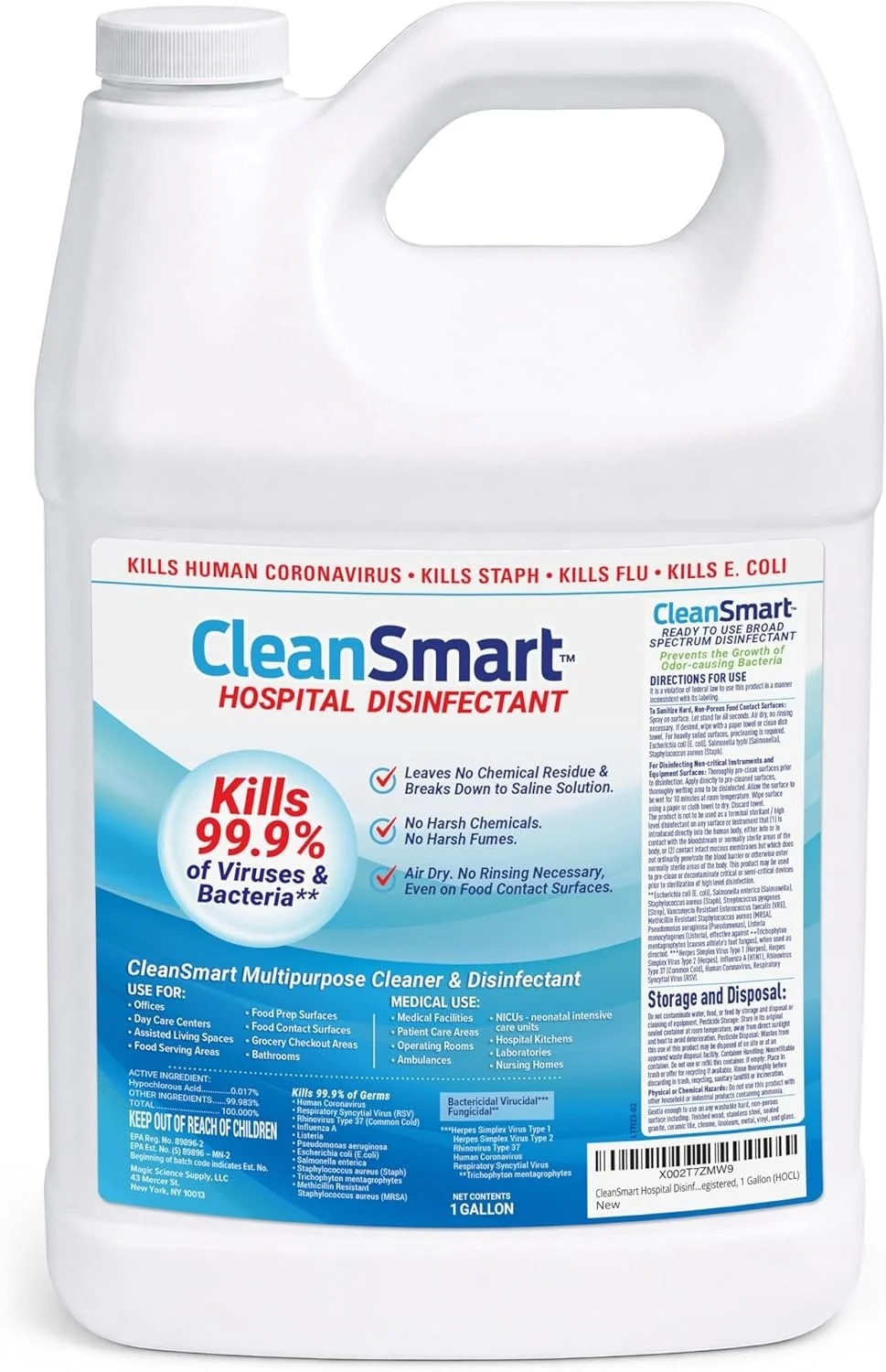
The first part of the setup is CleanSmart Hospital Disinfectant with Hypochlorous Acid.
CleanSmart is an EPA-registered disinfectant containing hypochlorous acid, with EPA Registration No. 89896-2. The product is marketed for settings that include schools, businesses, restaurants, and daycare centers.
What I like about buying it in the gallon size is that I am not going through a pile of little spray bottles.
When you are disinfecting daycare surfaces regularly, you use enough product that the larger container simply makes more sense.
It has also been much easier to incorporate into our normal routine because I am not dealing with a strong lingering cleaner smell throughout the daycare.
The biggest thing, though, is that I have a product intended to disinfect surfaces rather than relying on something that simply makes them look or smell clean.
The Sprayer Is What Made the Routine Practical
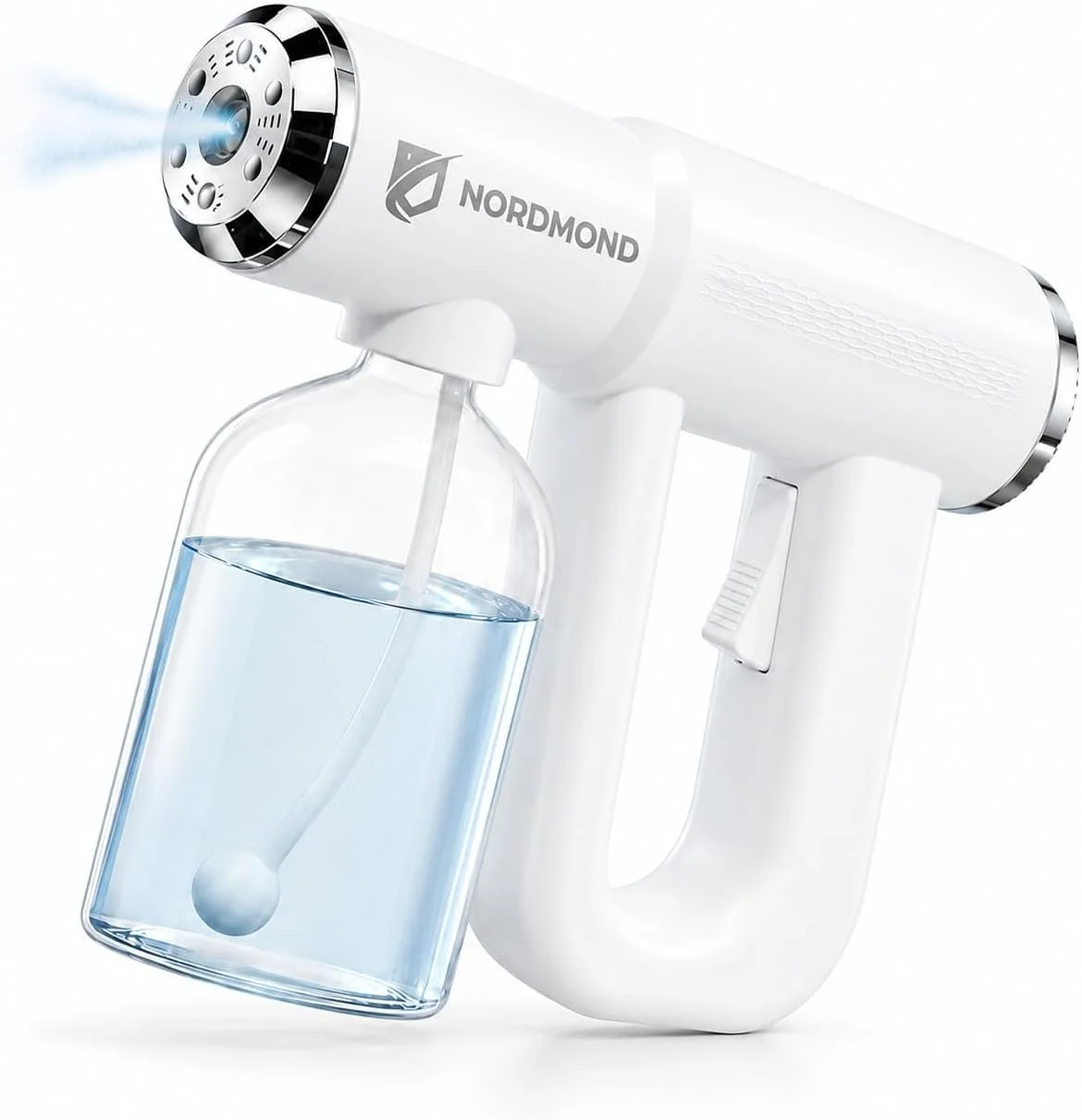
The second piece is this cordless fine-mist disinfectant sprayer.
This is the part that changed the amount of effort involved.
Instead of standing there with a trigger bottle spraying one little area at a time, the cordless sprayer produces a fine mist and lets me move through the daycare much more efficiently.
The Amazon listing describes the NORDMOND sprayer as having a 10-ounce tank, rechargeable battery, and fine-mist output designed for broader surface coverage.
That means I can work my way around things like:
Plastic toys
Play surfaces
Tables and chairs
Toy shelves
Handles
Hard-sided play equipment
Other appropriate hard surfaces
without my hand feeling like it is going to fall off from squeezing a spray bottle hundreds of times.
That sounds like a small thing until you are responsible for cleaning an entire daycare.
Then it is a very big thing.
The Sprayer Does Not Replace the Product Instructions
This is probably the most important part of the whole setup.
The machine does not determine whether something has been properly disinfected. The disinfectant label does.
You still have to use enough product, apply it to the correct type of surface, and leave the surface wet for the contact time required on the product label.
CDC guidance specifically recommends following the disinfectant manufacturer's directions, including safe application and proper use.
The EPA label for CleanSmart includes different directions depending on what you are sanitizing or disinfecting. For example, its sanitizing directions for certain hard, non-food-contact surfaces call for thoroughly wetting the surface and allowing it to remain wet for the stated contact time.
In other words, quickly waving a mister around a room is not automatically the same thing as disinfecting everything in it.
The sprayer is just a faster way to apply the product consistently.
What My Daycare Cleaning Routine Looks Like Now
I try to keep the routine simple enough that I can actually maintain it.
During the day, obvious messes still get cleaned as they happen.
Food surfaces are cleaned appropriately before and after meals. Bathroom and diapering areas get their own regular cleaning and disinfection. Toys that go into mouths or become visibly dirty get pulled from circulation until they can be properly cleaned.
Handwashing is also a big part of the routine. CDC recommends washing hands with soap and water for at least 20 seconds in early care and education environments.
Then there are the broader shared surfaces and toys.
That is where having the disinfectant and sprayer ready to go has made a big difference.
Instead of looking around at an entire daycare room at the end of the day and thinking about how long it is going to take to individually spray everything, I can work through the space systematically.
It feels manageable.
And when something feels manageable, you are much more likely to actually keep doing it.
When Someone Is Sick
A normal cleaning routine is one thing.
A sick child changes the equation.
When we know illness is going around, I pay closer attention to the surfaces everyone shares and the things that are touched constantly.
That includes door handles, tables, bathroom areas, faucets, shared toys, and other high-touch surfaces.
CDC guidance specifically recommends disinfecting when someone is sick and encourages childcare programs to have policies for keeping symptomatic children home.
That second part matters just as much as cleaning.
You cannot disinfect your way out of every illness.
Parents keeping sick children home when appropriate, handwashing, cleaning, ventilation, and good daycare hygiene all work together.
What I Do Not Expect These Products to Do
I want to be clear about something because childcare products are easy to oversell.
I do not believe buying a sprayer is going to prevent every daycare illness.
It will not.
Kids get sick.
They are around each other closely. They cough. They sneeze. They touch their faces. They share spaces. Some illnesses can spread before anyone even realizes a child is sick.
The reason I like this setup is much more practical.
It helped solve the cleaning problem that I could actually control.
I can keep our shared surfaces and equipment on a more consistent disinfecting routine without turning every evening into hours of wiping down the daycare.
That is the win.
A Few Daycare Cleaning Habits That Still Matter
The fancy tool is not the whole system.
The boring things still matter:
Wash hands frequently
Clean visibly dirty surfaces first
Pay extra attention to high-touch areas
Separate personal belongings when practical
Clean and sanitize food-contact areas appropriately
Regularly clean toys and play surfaces
Disinfect appropriate surfaces when illness is present
Keep sick children home according to your illness policy
Follow the directions on every cleaning or disinfecting product you use
CDC guidance also notes that childcare providers should use EPA-registered sanitizing or disinfecting products when appropriate and carefully follow product labels.
No single bottle or machine replaces those basics.
The Products That Finally Made This Easier for Me
After running a daycare and constantly dealing with the cycle of runny noses, coughs, stomach bugs, and everything else little kids bring through the door, I was tired of feeling like disinfecting the daycare was an endless project.
This setup has made it much easier.
I use the CleanSmart Hospital Disinfectant with the cordless fine-mist sprayer as part of a larger cleaning and hygiene routine.
They are not magic.
They are just tools that make an unavoidable part of running a daycare considerably easier to stay on top of.
And for me, that has been worth it.