

Learning Bushcraft With My Boys, One Knot at a Time
This post contains affiliate links. As an Amazon Associate I earn from qualifying purchases.
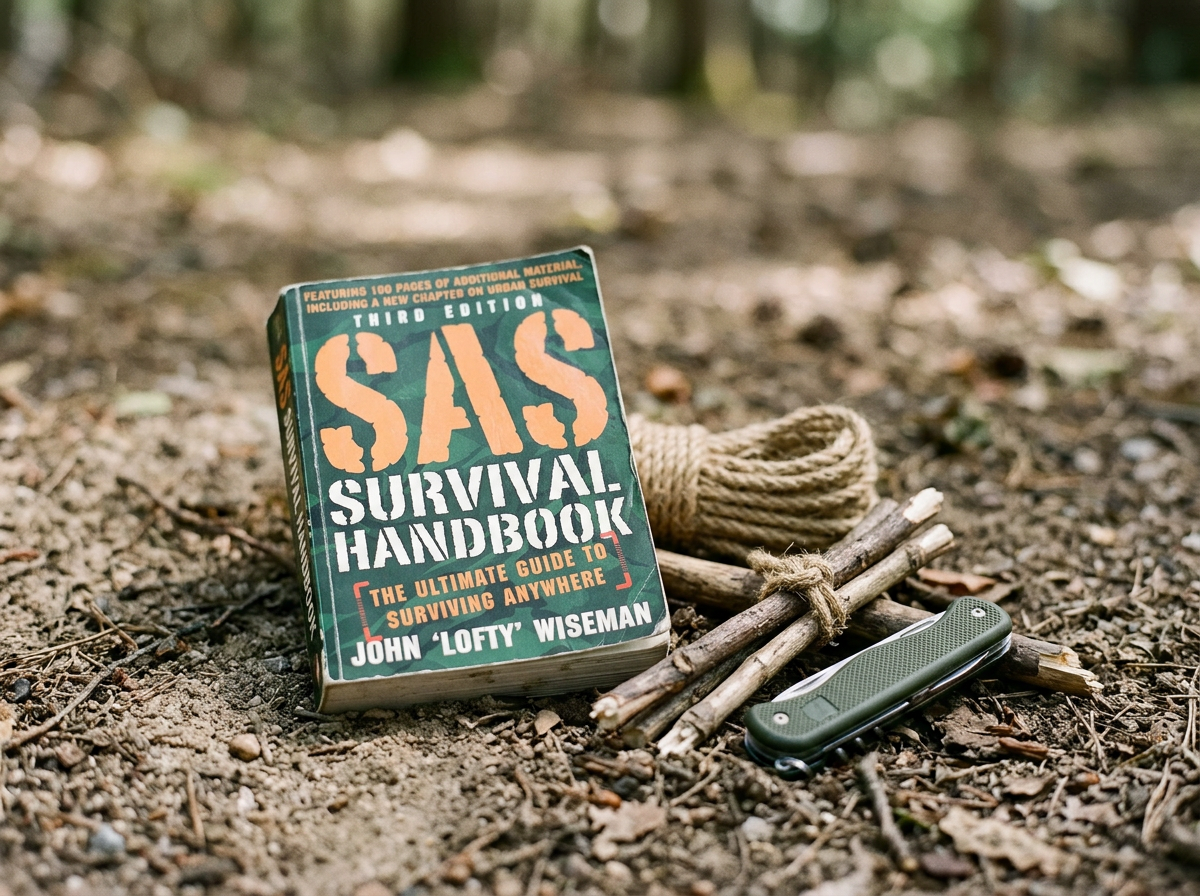
I bought my boys the SAS Survival Handbook thinking it would be a fun book for us to have around and learn a few outdoor skills from.
It has turned into exactly that.
We are not preparing to disappear into the wilderness for six months. We are not trying to turn every weekend into survival training.
Mostly, we have been sitting around with some rope, flipping through the book, trying knots, talking about what they are actually useful for, and learning a few bushcraft skills together.
And we've had a really good time doing it.
A Book You Don't Have to Read Front to Back
The SAS Survival Handbook, Third Edition is a big reference book. It runs more than 600 pages and covers everything from basic campcraft and shelter building to navigation, food, first aid, different climates, and emergency preparedness.
That could sound a little overwhelming.
But that is not how we use it.
We treat it more like a book to explore.
We will find something that looks interesting, read about it, and then see if we can actually do it.
Lately, that has meant knots.
Knot Tying Turned Out to Be a Great Place to Start
There is something satisfying about learning a knot.
At first you have a piece of rope and a diagram that doesn't make much sense.
Then you work through it.
Over.
Under.
Back through.
Pull it tight.
Usually get it wrong.
Try it again.
Then suddenly it works.
Once one of us figures it out, the next challenge is being able to tie it again without looking at the book.
That has been one of the fun parts of doing this with the boys. There is an immediate result. Either the knot works or it doesn't.
And once we learn one, we can start talking about why someone would choose that knot instead of just tying a bunch of random loops in a rope.
Learning Skills That Have an Actual Use
I like projects where the boys can see that what they are learning has a purpose.
A knot isn't something you learn just to complete an activity.
You might use it to secure gear.
Tie something down around camp.
Rig a tarp.
Make a simple shelter.
Attach a line.
Bundle equipment.
Those are small skills, but they start connecting to bigger outdoor projects.
The SAS Survival Handbook covers camp setup, shelter construction, tools, weather, navigation, and other practical outdoor subjects, so there is plenty for us to move into as their interests change.
The book gives us the information.
The fun part is figuring out how to turn that information into something we can actually practice.
Bushcraft Doesn't Have to Mean a Huge Wilderness Trip
"Bushcraft" can sound like something that requires a remote forest, an enormous pack, and a week off work.
It doesn't have to.
We can practice a lot of these skills at home.
Tie knots in the yard.
Try setting up a tarp.
Practice packing gear.
Learn how to organize a camp.
Talk about what you would bring on a day hike.
Look at a map and figure out where you are.
Try making something useful from a few basic materials.
That makes it much easier to turn outdoor skills into part of normal family life instead of saving them for the occasional camping trip.
The Mistakes Are Part of It
This might be my favorite part.
When you are learning a physical skill together, nobody gets to pretend they know everything.
Sometimes I look at one of the diagrams and have absolutely no idea what the rope is supposed to be doing.
Sometimes one of the boys figures it out first.
Sometimes we think we have it right, pull on the knot, and immediately discover that we definitely do not.
Then we untie it and try again.
There is no test at the end.
We are just learning something together.
That keeps it fun.
From Knots to Bigger Projects
I can already see how this can grow beyond sitting around tying rope.
Once we have a few knots down, there are plenty of small projects we can try.
We could rig a tarp shelter.
Build a simple camp setup in the yard.
Practice making a ridgeline.
Work on basic navigation.
Put together small outdoor kits.
Take what we have learned on a camping trip or microadventure.
The handbook is broad enough that we can keep coming back to it as we find new things we want to learn. It was written by John "Lofty" Wiseman, a former chief survival instructor with Britain's Special Air Service, and the current third edition includes substantial material on outdoor skills and preparedness.
I do not expect us to work through all of it.
That's not really the point.
Something Better Than Just Telling the Kids to Go Outside
I am always looking for things we can actually do together.
Not another thing for them to watch.
Not another app.
Not an elaborate activity that takes longer for me to prepare than it does for them to enjoy.
A book, a few pieces of rope, and an hour outside has been enough.
It gives us something to work on together, and when we finish, we actually know something we didn't know before.
That is a pretty good return on a book and a piece of cord.
A Natural Fit With Microadventures
This has also fit nicely with the way we have been thinking about microadventures.
You do not have to wait for a major expedition before learning outdoor skills.
Learn the knot now.
Practice setting up the tarp in the backyard.
Figure out the gear.
Then when you decide to take a short camping trip, explore a new trail, or head somewhere for the night, you already know a little more than you did before.
The small skills and the small adventures build on each other.
That is the kind of experience I want more of with my boys.
Not pretending every Saturday is an epic wilderness expedition.
Just getting outside, learning useful things, trying stuff, occasionally getting it wrong, and having a good time together.
If you want to check out the book we've been using, you can find the SAS Survival Handbook, Third Edition in our Amazon shop.