

Why I Keep Coming Back to The Dharma Bums
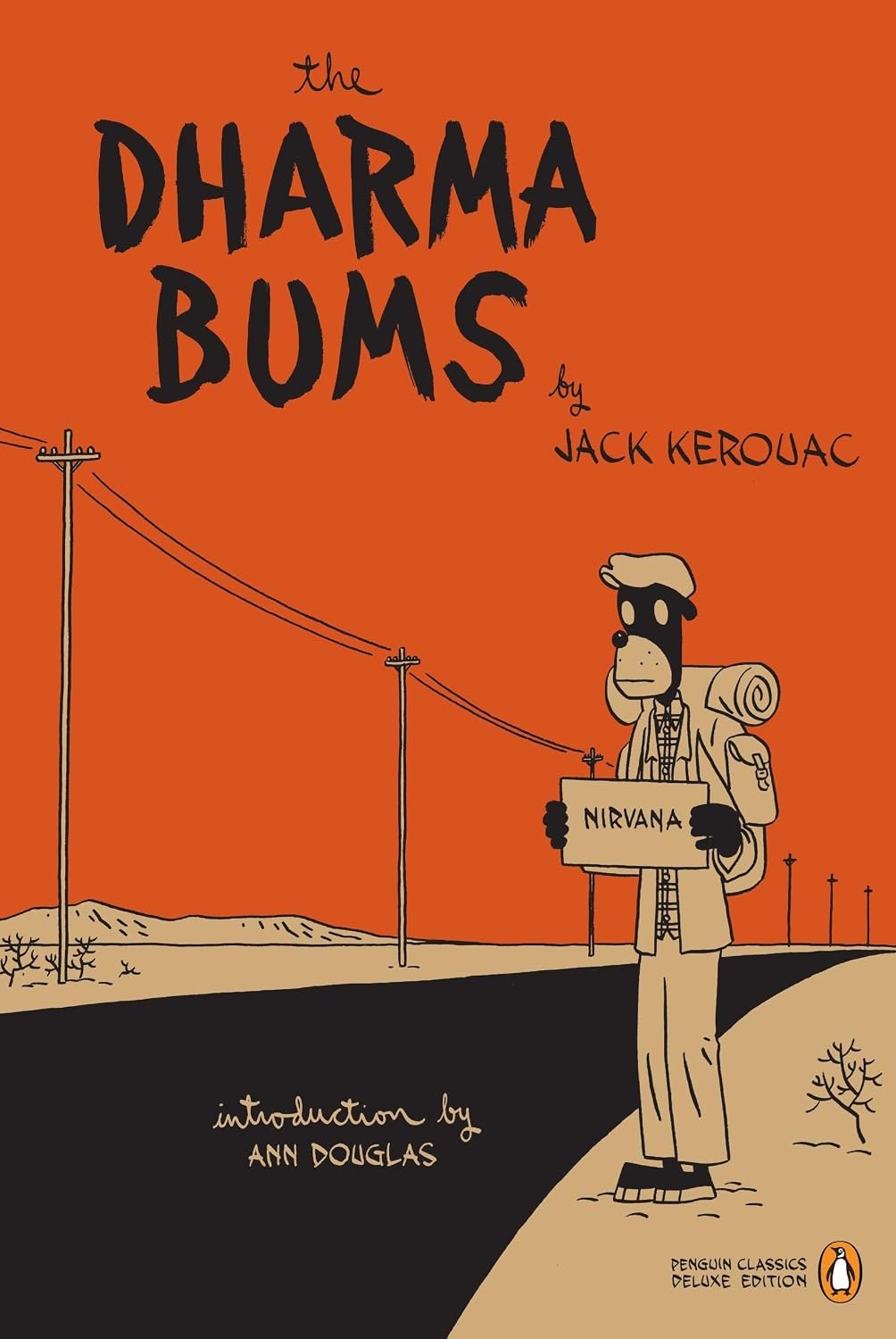
There are books you read once, enjoy, and put back on the shelf.
Then there are books you keep coming back to.
For me, one of those is Jack Kerouac's The Dharma Bums.
Part of it is simply the writing. I like Kerouac's pacing and the way the story always seems to be moving. Somebody is leaving. Somebody is arriving. There is a train to catch, a mountain to climb, a friend to see, a party happening, or another idea about what life might look like.
There is almost always a sense that the next thing is waiting just beyond wherever they happen to be.
But I think the reason the book has stayed with me has less to do with the writing itself and more to do with what it makes me want to do after I put it down.
It makes me want to go somewhere.
The Next Thing Is Always Out There
One of the things I love about The Dharma Bums is how willing the characters are to just go.
They are not necessarily waiting until everything lines up perfectly.
They set off.
They hitch rides. They climb mountains. They wander through cities. They sleep wherever they can. They end up at friends' houses. They make plans and change them. One experience seems to lead almost immediately into another.
There is something appealing about that kind of momentum.
Adult life can become extremely good at teaching us the opposite.
We have calendars.
Responsibilities.
Projects that need finishing.
Kids who need to be somewhere.
Work on Monday.
Bills.
Laundry.
Weeds that keep growing.
There is always a perfectly legitimate reason to stay home.
That is probably why the idea of simply deciding to go still feels powerful.
Not abandoning your responsibilities.
Just refusing to let them convince you that adventure has to wait indefinitely.
California Makes the Book Feel Different to Me
The geography is a big part of my connection to the book.
I am a Californian, and I have spent enough time on the east side of the Sierra to know the feeling of that landscape.
There is something about those mountains that makes time feel less important.
Roads change.
Towns grow.
Buildings disappear.
Cars change.
People certainly do.
The mountains mostly don't.
You can stand somewhere along the eastern Sierra today and look up at essentially the same enormous wall of rock someone would have looked at generations ago.
That connection gets me every time.
When I read about the mountains in The Dharma Bums, I don't have to completely imagine the feeling of being there.
I know some version of it.
Dry air.
Huge distances.
Cold mornings.
The way the light hits the mountains.
The feeling of looking up and realizing just how small you are compared with the country around you.
That experience has not really gone out of date.
The Mountains Don't Care What Year It Is
Maybe that is part of why places like the Sierra are so good for getting your head straight.
They have almost no interest in whatever you thought was extremely important before you got there.
The email can wait.
The challenges at work occupy less space in your head.
The endless list of things you are supposed to accomplish loses some of its urgency.
The mountain is still just the mountain.
You still have to walk up it.
You still get tired.
You still stop and look around.
You still have to decide whether to keep going.
There is something reassuring about experiences that haven't been improved very much by technology.
Walking into the mountains is still walking into the mountains.
A cold night is still cold.
A steep trail is still steep.
A good view still makes you stop.
That continuity makes a book like The Dharma Bums feel strangely close even though the world around the characters is very different from ours.
Adventure as a Way of Finding Something
The message I keep taking from the book is not that everybody needs to become a wandering poet.
It is simpler than that.
Sometimes you have to leave the normal routine long enough to hear yourself think.
There is a version of self-discovery that comes from sitting quietly and thinking about your life.
There is another version that seems to require movement.
Take the trip.
Climb the mountain.
Ride the road.
Sleep somewhere unfamiliar.
Get tired.
Get uncomfortable.
Get a little lost.
See what you think about while you are doing it.
I've always connected more with that version.
There is something about setting out on an adventure, even a small one, that strips away some of the noise.
You come home with the same job, the same house, the same responsibilities, and usually the same problems.
But sometimes you come home seeing them a little differently.
It Isn't Just About Being Alone
The other thing I sometimes forget about The Dharma Bums is how much of it is about people.
There is solitude in the book, and there are mountains and wandering and searching.
But there is also friendship.
People are constantly showing up at somebody's place.
They eat together.
Drink together.
Argue about ideas.
Sleep on floors.
Throw parties.
Disappear for a while and then somehow find each other again.
There is an almost communal feeling to parts of the book that I really like.
The adventure isn't always escaping from people.
Often, people are the adventure.
That feels important.
There is a version of the adventurous life that gets presented as complete independence. One person alone against the wilderness.
There is definitely value in being alone.
But some of the best experiences I've had involved people I cared about being there too.
A trip gets better because of who went.
A dumb story becomes funny because everybody remembers it.
A place becomes important because of what happened there with your friends.
The same mountain can be both a place to be alone and a place to build a friendship.
Those things aren't contradictory.
The Flophouse Part of the Dream
I also like the less serious side of the book.
The crowded houses.
The parties.
People sleeping wherever there is space.
Friends coming and going.
Somebody always seems to have an idea.
There is a looseness to it.
I don't necessarily want to recreate a 1950s flophouse full of poets in my living room.
But I understand the appeal.
A house where people feel comfortable showing up.
Food on the table.
Projects happening.
Kids running around.
Friends staying longer than planned.
Somebody working on something in the garage.
Somebody else sitting outside with a beer.
Plans for tomorrow being made while everyone is still finishing today.
That version of community makes sense to me.
Maybe the modern version is a little less romantic and involves more dishes.
But I think the basic idea still holds up.
A good life is partly about where you go.
It is also about who feels welcome when they come through your door.
Why This Connects to Microadventures
I think this is also part of why I have become so interested in microadventures.
You don't have to recreate Kerouac's life to take something valuable from the attitude behind it.
Most of us cannot disappear for months.
But we can leave Saturday morning.
We can take the motorcycle over a pass we've never ridden.
We can sleep somewhere for one night.
We can drive toward the mountains.
We can take the kids somewhere unfamiliar.
We can decide that an ordinary weekend deserves a story.
The scale isn't really the important part.
The decision to go is.
That is what I keep coming back to.
Adventure is not necessarily something waiting for you during some future version of your life when you finally have enough time.
It is something you have to keep making room for now.
Some Books Stay With You Because Places Do
I don't know if I will ever stop rereading The Dharma Bums.
Probably not.
Every time I come back to it, I am a little older and reading it from a slightly different place in my own life.
But the mountains in the book are still there.
The Sierra is still there.
The urge to pack something, pick a direction, and go see what is on the other side of the hill is still there too.
Maybe that is why the book has lasted for me.
It reminds me that life doesn't always need another plan.
Sometimes it needs motion.
A few close friends.
A place worth going.
And the willingness to set off toward whatever comes next.