

Why I Still Make Chicken Stock the Anthony Bourdain Way
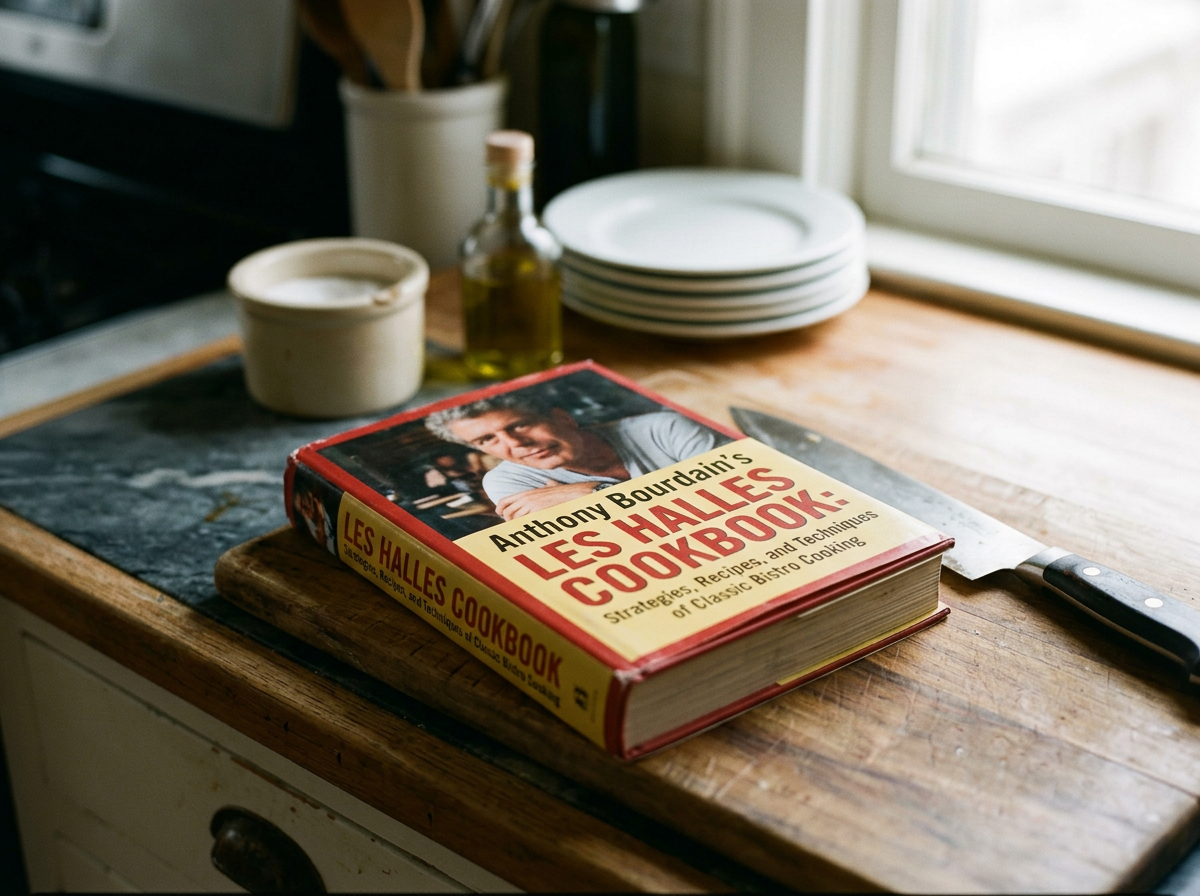
When I first got interested in cooking, Anthony Bourdain had a lot to do with it.
I was in college, cooking mostly for myself, and watching his travel shows. I liked the food, obviously, but I think what really hooked me was the way he interacted with the world. Food wasn't just something you ate. It was connected to places, people, work, culture, history, and all the strange little rituals people build around a table.
It made cooking seem like something worth knowing how to do.
So I read Kitchen Confidential.
That book was gritty and funny and occasionally pretty ugly. It romanticized restaurant culture while simultaneously giving you plenty of reasons to never work in a restaurant. Somehow it could make you think, "I absolutely do not want that life," and, a few pages later, "I kind of want to be a chef."
There was a craftsmanship to it that I liked.
Years later, watching The Bear gives me a little of that same feeling. The intensity is part of it, but underneath all of that is the idea that there is a right way to do something. That technique matters. That somebody spent years learning how to make something seemingly simple really well.
Around that same time, I bought Anthony Bourdain's Les Halles Cookbook.
And I've been dragging this particular copy around ever since.
A lot of the book is still beyond the way I normally cook. I'm feeding a family, not running a French brasserie. I don't have the time, equipment, ingredients, or technique for plenty of what's in there.
But there are a handful of things I learned from it that stuck.
One of them is stock.
The Bones Aren't Garbage Yet
Last week we had a couple of rotisserie chickens.
We stripped the meat off for dinner and were left with the carcasses. One of my sons was nearby and asked what we were going to do with the bones.
I told him we'd make stock.
He asked what stock was.
And I realized I was explaining to him something that I probably first really understood because of Bourdain.
Stock is where a lot of flavor starts.
It's the liquid underneath the soup, sauce, gravy, stew, rice, beans, braised meat, or whatever else you're making. It's one of those ingredients that is almost invisible once the meal is finished, but you notice when it's missing.
There is a big difference between cooking something in water and cooking it in a good stock.
Restaurant kitchens understand this because they are constantly building one thing from another. Bones, vegetable scraps, herbs, and trimmings don't necessarily go straight into the garbage. They become the beginning of something else.
That idea makes even more sense to me now than it did when I was a college kid reading cookbooks.
We have a big family. We raise animals. We garden. We cook constantly. Throwing two chicken carcasses away when there is still something useful in them seems ridiculous.
So I showed my son what to do.
Coming Back to an Old Book
I pulled out the same cookbook I've had all these years and turned back to the section on stock.
Bourdain's approach isn't complicated. In fact, that's part of the point.
Bones. Vegetables. Herbs. Water. Time.
For dark stocks, the ingredients are roasted and browned first. For lighter stocks, they aren't. The liquid gets brought up to temperature and then kept at a gentle simmer rather than violently boiled. Foam and fat get skimmed. Eventually everything gets strained out.
Then you're left with the thing you actually wanted.
Flavor.
One detail from those pages has always stayed with me: don't aggressively boil stock.
A slow simmer extracts what you want without churning everything into a cloudy mess.
There is something satisfying about the whole process because almost nothing is happening.
A pot sits on the stove.
The house starts smelling good.
You occasionally skim it or check the water.
Hours later, a pile of bones and vegetable scraps has turned into something genuinely useful.
Cooking Changed, But That Part Didn't
My cooking looks a lot different now than it did when I bought this book.
Back then I was cooking whatever sounded interesting because I was curious and mostly feeding myself.
Now I'm making dinner for a family.
That means cooking has to be practical. It has to use what we already have. It has to stretch ingredients. It has to be something people will actually eat. Sometimes dinner is creative and interesting, and sometimes everybody is hungry and I just need to get food on the table.
But I still like cooking.
I like trying something new. I like figuring out how to make something taste better. And, maybe more than anything, I like feeding people.
I think some of that came from Bourdain too.
For all the swagger and restaurant stories, there was always something underneath his writing about the pleasure of feeding somebody well.
Now one of my kids is standing beside the stove asking why we're saving chicken bones.
So I get to show him.
That's a pretty good return on a cookbook I bought more than twenty years ago.
And once you've got the bones, you might as well make the stock.
Rotisserie Chicken Stock
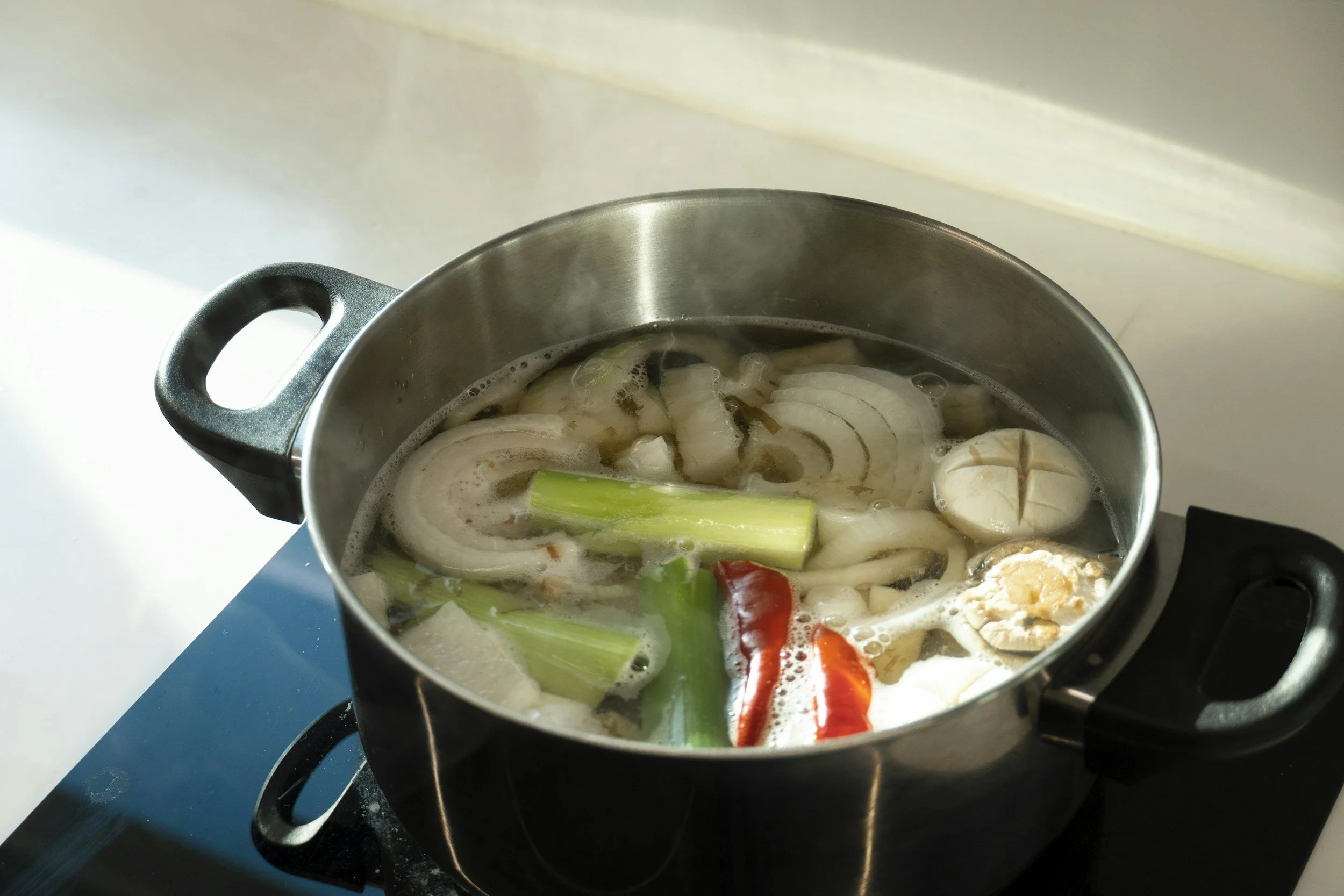
This is our practical home-kitchen version, built around the techniques I originally learned from Anthony Bourdain's Les Halles Cookbook. Because rotisserie chickens are already roasted, a lot of the browning work has already been done for you.
Ingredients
2 rotisserie chicken carcasses, with most of the usable meat removed
1 large onion, roughly chopped
2 carrots, roughly chopped
2 celery stalks, roughly chopped
2 bay leaves
A few sprigs of fresh thyme, if you have it
8 to 12 whole black peppercorns
Cold water
Optional: a few parsley stems, garlic cloves, or other mild vegetable trimmings
Do not add salt at the beginning. Rotisserie chickens can already contain quite a bit of salt, and the stock will become more concentrated as it cooks.
1. Break Down the Carcasses
Pull the chickens apart enough that they fit comfortably into a large stockpot.
Don't worry about cleaning every tiny bit of meat from the bones. The remaining meat, skin, connective tissue, and cartilage all contribute flavor and body.
2. Add the Vegetables and Aromatics
Add the onion, carrots, celery, thyme, bay leaves, and peppercorns.
The vegetables don't need to be finely chopped. You're going to strain all of this out later.
3. Cover With Cold Water
Add enough cold water to cover everything by an inch or two.
Starting with cold water gives the ingredients time to gradually release their flavor as the pot heats.
4. Bring It Up Slowly
Bring the pot just toward a boil.
Then turn the heat down.
This is important.
You want a gentle simmer, not a rolling boil. You should see occasional bubbles and movement in the pot, but it shouldn't look like you're cooking pasta.
5. Let It Simmer
Let the stock gently simmer for about 4 to 6 hours.
Check it periodically. Skim away foam or excess fat that collects on the surface. If the water level drops far enough that the bones are exposed, add a little more water.
There isn't much else to do.
That's one of the nice things about making stock.
6. Strain It
Remove the large bones and vegetables, then pour the stock through a fine mesh strainer.
For a clearer stock, strain it again through cheesecloth or an even finer strainer.
Don't mash the vegetables through the strainer. Let the liquid drain naturally.
7. Cool It Quickly
Don't leave a large pot of hot stock sitting on the counter for hours.
Divide it into smaller containers so it cools quickly, or set the container in an ice bath before refrigerating it.
Once refrigerated, any remaining fat will usually solidify on top and can easily be removed if you want a leaner stock.
8. Freeze What You Won't Use
Freeze the stock in whatever portions make sense for the way you cook.
Quart containers are great for soups.
One or two cup portions are useful for rice, sauces, beans, or braising.
You can also freeze concentrated stock in smaller portions for those times when something you're cooking tastes like it needs a little more depth.
What To Use It For
Once it's in the freezer, homemade chicken stock becomes one of those ingredients you start reaching for constantly.
Use it for:
Chicken noodle soup
Gravy
Rice or risotto
Beans
Pot pie filling
Pan sauces
Braised vegetables
Stews
Mashed potatoes
Cooking grains
Deglazing a roasting pan
Almost anything where you'd otherwise reach for a carton of broth
And then the next time you bring home a rotisserie chicken, save the bones.
Maybe somebody standing in the kitchen with you will ask why.
That's how these things get passed along.